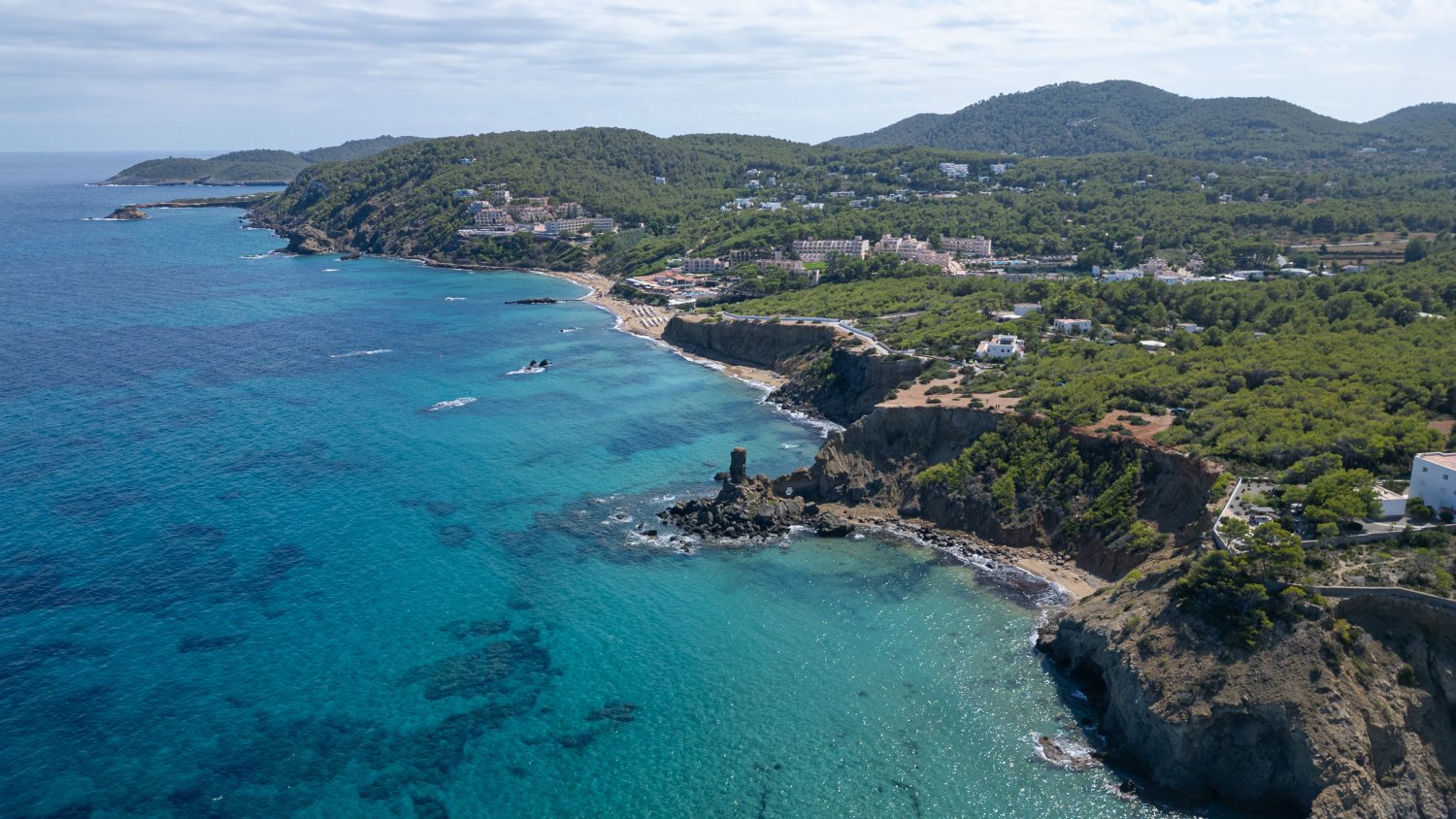
Ibiza is an island best explored by road, and this northeast route is a good example of why. With a car from Autos Marí - located in the town of Santa Eulalia - the route winds through pine-covered hills and picturesque countryside towards a string of quieter coves and coastal viewpoints.
Start in San Carlos
Begin in San Carlos, one of the island’s most characterful villages and a former meeting point for Ibiza’s hippie community. Breakfast at Las Dalias Café makes a good starting point before heading towards the coast.
From San Carlos, follow the winding roads towards Cala Leña. The journey itself is part of the attraction, passing pine forests, farmland and traditional whitewashed houses.
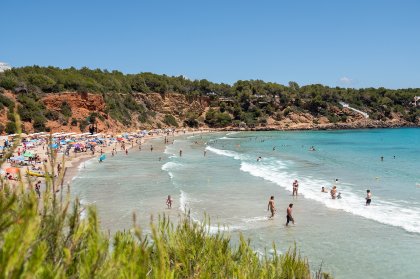
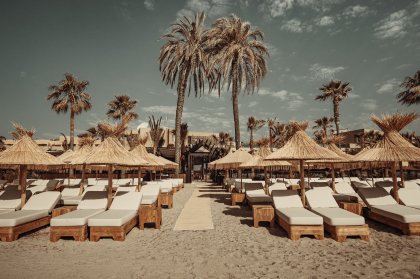
Cala Leña is a broad sandy beach backed by woodland, with a long wooden walkway and a beach bar. Take a stroll before continuing north towards the smaller coves and rural landscape around Pou des Lleó.
Rural roads and an old watchtower
The drive towards Pou des Lleó reveals another side of Ibiza. The narrow roads pass vineyards, vegetable plots and traditional fincas, with plenty of opportunities to stop and take in the countryside.
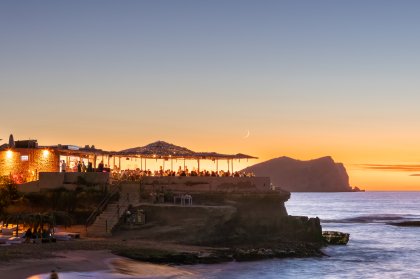
At Pou des Lleó, the tiny bay is surrounded by a rugged coastline and traditional fishermen’s huts. From here, it is possible to walk towards the Torre de Campanitx, an 18th-century watchtower built as part of Ibiza’s coastal defence system against pirate attacks.
The tower sits above the coastline and is one of several reminders that these seemingly peaceful shores were once vulnerable to raids. The surrounding landscape is equally rewarding, with views towards the sea and the private island of Tagomago.
A little further along, the resort of Es Figueral offers a more relaxed, family-friendly stretch of coastline. Its long, golden-sand beach is backed by rocky cliffs and pine-covered hills, with shallow turquoise water (ideal for the little ones) and views towards the private islet of Tagomago. The small resort also has a handful of restaurants and bars, while the surrounding countryside is well suited to walking and cycling.
Aguas Blancas and the changing coastline
Continue towards Aguas Blancas, one of Ibiza’s best-known beaches and a long-time favourite with naturists. The beach sits below high cliffs, with striking white rock and clear water giving the area its name.
However, Aguas Blancas is currently off-limits to normal beach access: the access road and car park are closed because of the increased risk of falling stones from the cliffs, and there are no municipal services or lifeguard cover. The area is clearly signposted, and visitors are advised to respect the restrictions rather than attempt to reach the beach.
Timing matters here. The cliffs eventually cast shade across much of the beach, so an earlier visit is preferable if swimming and sunbathing are the priority.
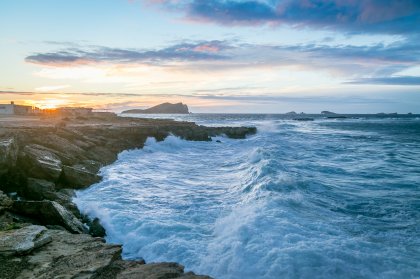
Rather than simply heading straight to the sand, take a moment to appreciate the coastline around the approach. The northeastern shore is full of small inlets, rocky outcrops and secluded corners that are easy to miss when travelling between the main beaches.
Cala San Vicente
From Aguas Blancas, the road continues towards Cala San Vicente, with the landscape becoming increasingly hilly. The descent towards the bay eventually opens up to a wide view of brilliant blue water framed by pine-covered slopes.
Cala San Vicente has a long sandy beach and a promenade lined with restaurants and bars, with plenty of choice ranging from traditional Ibizan cooking and local fish to Mediterranean and international fare.
Into the hills
Leaving Cala San Vicente, the road heads inland through some of the northeast’s most dramatic countryside.
The terrain here is a reminder that Ibiza is not simply a coastal destination. Steep hills, pine forests and old agricultural terraces give way to quieter rural roads, with traditional stonework still visible on the slopes.
The historic terracing is particularly interesting.
Long before tourism, these hills were cultivated, with farmers using dry-stone walls to create level areas for growing crops. The landscape still carries traces of that agricultural past.
Finish at Cala d’en Serra
The final stop is Cala d’en Serra, reached by a narrow road descending towards the coast.
It is a small, rugged cove rather than one of Ibiza’s large resort beaches, with clear green-blue water and traditional fishermen’s huts providing a strong sense of place. The surrounding landscape remains relatively wild, making this a rewarding final stop after a day spent exploring the northeast.
It is also a good place to take a final swim before heading back.
Take your time
The beauty of this road trip is that there is no need to treat it as a race from one beach to the next. The roads themselves are part of the experience, particularly where they climb into the hills and reveal glimpses of the coastline below.
Allow time for a swim at Cala Llenya or Aguas Blancas, a walk around Pou des Lleó, the Torre de Campanitx and its surroundings, lunch at Cala San Vicente and a final dip at Cala d’en Serra.
By the time you turn for home, you will have seen a side of Ibiza that feels a long way from the island’s busier resorts: pine forests, working farmland, historic defences, fishermen’s huts and a coastline that rewards a slower pace.
That is the real pleasure of exploring the northeast. You don't need to go far from the familiar Ibiza to find somewhere that feels entirely different.